
Sweepstakes Casino Legal States 2026: Complete US Availability Map
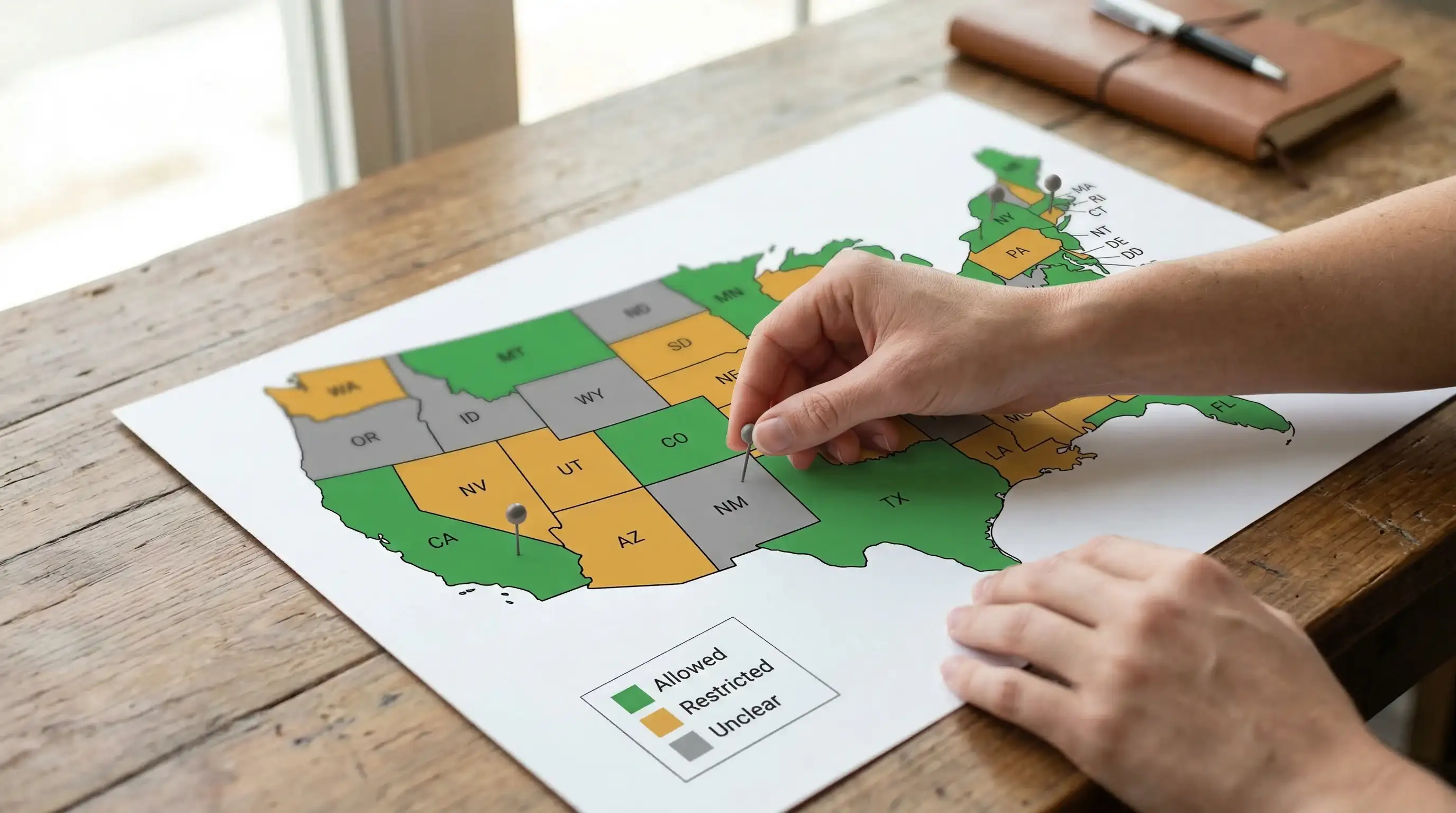
Sweepstakes casino legal states represent a patchwork of regulatory attitudes that can confuse even the most diligent players. Unlike traditional online gambling, which remains restricted to a handful of jurisdictions, sweepstakes casinos have carved out a unique space in American gaming by operating under promotional sweepstakes law rather than gambling statutes. This distinction matters because it determines whether you can legally play from your living room in Texas or face potential legal consequences in California. With more than one million Americans playing sweepstakes casinos monthly, according to testimony submitted to the Maryland legislature, understanding where these platforms operate legally has become increasingly important.
The legal SC landscape shifted dramatically in 2025 and early 2026. California signed AB 831 into law, effectively banning sweepstakes casinos from the nation’s largest state market. New York followed with aggressive attorney general enforcement and new legislation. Meanwhile, dozens of other states continue to welcome these platforms without incident. The result is a regulatory environment that requires players to understand not just where they can play, but why certain states draw hard lines while others remain open.
This guide maps out the current state-by-state availability of sweepstakes casinos, explains the legal framework that makes them possible, and examines the recent crackdowns that have reshaped the industry. Whether you’re trying to figure out if Stake.us works in your state or wondering why Nevada doesn’t allow sweepstakes platforms, you’ll find the answers here.
- The Legal Foundation: Why Sweepstakes Casinos Aren’t Gambling
- States Where Sweepstakes Casinos Operate Freely
- States Where Sweepstakes Casinos Are Prohibited
- States with Partial Restrictions or Pending Legislation
- How Operators Are Responding to State Bans
- What’s Next: Regulatory Trends Through 2027
- What Players Should Do in Restricted States
- Staying Legal While Enjoying SC Gaming
The Legal Foundation: Why Sweepstakes Casinos Aren’t Gambling
The reason sweepstakes casinos exist at all comes down to a legal concept called the “triple test.” Under US law, gambling requires three elements: a prize, an element of chance, and consideration (something of value exchanged for entry). Traditional casinos hit all three—you pay money, spin a slot, and potentially win money. Sweepstakes casinos remove the consideration piece by ensuring players never have to pay to participate in their prize drawings.
Here’s how it works in practice. When you purchase Gold Coins at a sweepstakes casino, you’re buying a virtual entertainment product, not a gambling stake. The Sweeps Coins you receive alongside that purchase come as a free promotional bonus. Critically, you can also obtain Sweeps Coins without any purchase through daily login bonuses, mail-in requests, and social media giveaways. This “no purchase necessary” pathway is what legally transforms the experience from gambling into a promotional sweepstakes.
The model draws directly from decades of sweepstakes law governing everything from McDonald’s Monopoly promotions to Publisher’s Clearing House mailings. According to KPMG’s 2025 analysis of the sweepstakes gaming industry, sweepstakes casinos are now accessible in more than 35 states, compared to just seven states where traditional iGaming operates legally. This accessibility gap explains why the industry has exploded—it offers casino-style entertainment to residents in markets where real-money online gambling remains prohibited.
Not everyone accepts this legal reasoning. Critics argue the model is gambling dressed up in sweepstakes clothing. The American Gaming Association has called these operations “too-clever-by-half” attempts to circumvent gambling laws. State regulators in Washington have explicitly rejected the sweepstakes model, stating that it combines elements of two legal gaming forms into an unauthorized third type. These opposing interpretations drive the state-by-state variation in availability.
For players, the practical implication is straightforward: the sweepstakes model’s legality depends entirely on how your state interprets these promotional sweepstakes rules. Some states actively embrace the model, others tolerate it through inaction, and a growing number have moved to ban it outright.
States Where Sweepstakes Casinos Operate Freely
The majority of American states allow sweepstakes casinos to operate without specific restrictions. This doesn’t mean these states have formally legalized or regulated the industry—most haven’t taken any official position at all. Rather, sweepstakes platforms function in these markets because state gambling laws don’t explicitly prohibit promotional sweepstakes models, and regulators haven’t chosen to challenge them.
States with full sweepstakes casino availability generally fall into two categories. The first includes states with permissive gambling environments that either lack comprehensive gaming laws or have regulatory frameworks that don’t capture the sweepstakes model. Texas, for example, has restrictive casino gambling laws but no specific prohibition on sweepstakes promotions, making it one of the largest markets for platforms like Chumba Casino and Stake.us.
The second category comprises states where regulators have implicitly accepted the sweepstakes model through inaction. In these jurisdictions, sweepstakes casinos have operated for years without legal challenges. Players in states like Florida, Pennsylvania, Ohio, and Georgia can access most major platforms, though this availability comes with the caveat that regulatory attitudes could shift.
Among the states where sweepstakes casinos operate without restriction: Alabama, Alaska, Arizona, Arkansas, Colorado, Connecticut, Delaware, Florida, Georgia, Hawaii, Illinois, Indiana, Iowa, Kansas, Kentucky, Louisiana, Maine, Massachusetts, Minnesota, Mississippi, Missouri, Nebraska, New Hampshire, New Jersey (pending legislation), New Mexico, North Carolina, North Dakota, Ohio, Oklahoma, Oregon, Pennsylvania, Rhode Island, South Carolina, South Dakota, Tennessee, Texas, Utah, Vermont, Virginia, West Virginia, Wisconsin, and Wyoming.
Regional patterns emerge when you examine this list. The Midwest and South show particularly high availability, with states like Ohio and Texas hosting substantial player populations. The Northeast remains largely open despite its generally stricter gambling regulations, though New Jersey’s pending legislation could change this. Western states present more variation, with California and Nevada now off-limits while Arizona and Colorado remain accessible.
Players should understand that “operating freely” doesn’t mean “fully regulated.” Most of these states have no specific consumer protections for sweepstakes casino players, no required fairness audits, and no licensing requirements for operators. The platforms operate under general consumer protection laws and their own internal policies rather than gaming commission oversight.
States Where Sweepstakes Casinos Are Prohibited
A smaller but growing group of states has moved to explicitly ban or effectively prohibit sweepstakes casinos. These restrictions fall into two categories: longstanding prohibitions based on existing gambling laws, and recent legislative or enforcement actions specifically targeting the sweepstakes model.
Washington State has maintained the clearest position against sweepstakes casinos for years. The Washington State Gambling Commission explicitly states that sweepstakes casinos are not permitted, arguing that they “combine elements of two legal types of gaming” to create an unauthorized third form. This interpretation means players in Washington cannot legally participate in sweepstakes casino games, and operators geo-block the state entirely.
Idaho’s strict gambling laws similarly prohibit sweepstakes casinos, with the state maintaining one of the most restrictive gaming environments in the country. Nevada presents an ironic case: despite being America’s gambling capital, sweepstakes casinos cannot operate there because the state’s comprehensive gaming regulations don’t accommodate the model, and regulators have no incentive to allow unregulated competition for licensed casinos.
Michigan’s Gaming Control Board issued cease-and-desist orders to major operators including VGW (Chumba Casino), Stake.us, and PredictionStrike in late 2023. The state determined these platforms were operating illegal gambling operations, forcing them to block Michigan residents. Montana became the first state to formally ban sweepstakes casinos through legislation, with the prohibition taking effect October 1, 2025.
The most consequential recent bans came from California and New York, the two largest state markets in the country. These actions fundamentally altered the sweepstakes casino industry’s trajectory and deserve detailed examination.
California: AB 831 and the 2026 Ban
California’s ban on sweepstakes casinos represents the most significant regulatory action the industry has faced. Governor Gavin Newsom signed AB 831 into law on October 11, 2025, with the prohibition taking effect January 1, 2026. According to the California Senate analysis of the bill, the legislation passed with overwhelming bipartisan support—79-0 in the Assembly and 36-0 in the Senate—reflecting a rare consensus among California lawmakers.
The financial stakes were enormous. According to Eilers & Krejcik Gaming analysis, California represented approximately 17-20% of the entire US sweepstakes casino market revenue. Losing access to nearly one-fifth of their customer base forced operators to fundamentally reconsider their business models and expansion strategies.
AB 831 carries serious penalties for violations. Operators who continue serving California residents face fines up to $25,000 and potential imprisonment of up to one year. These criminal penalties underscore California’s determination to enforce the ban rather than rely on voluntary compliance.
The coalition behind AB 831 united traditional adversaries. California’s powerful tribal gaming interests, which had previously clashed with card rooms and state lottery officials, joined forces with those same groups to push for the ban. The tribes’ concern centered on protecting their substantial investment in regulated casino operations from what they viewed as unregulated online competition. Card rooms and commercial gambling interests shared this protectionist motivation.
For California residents who previously enjoyed sweepstakes casinos, the options have narrowed considerably. All major operators now geo-block California IP addresses, and attempting to circumvent these restrictions through VPNs violates both the platforms’ terms of service and potentially state law. The state’s legal alternatives remain limited to tribal casinos, card rooms, the state lottery, and legal sports betting through tribal partnerships.
New York: AG Crackdown and S.5935A
New York’s approach to sweepstakes casinos combined aggressive enforcement with swift legislative action. Attorney General Letitia James sent cease-and-desist letters to 26 sweepstakes platforms, demanding they stop serving New York residents immediately. This enforcement action preceded formal legislation but signaled the state’s determination to treat sweepstakes casinos as illegal gambling operations.
The legislative response came through Senate Bill S.5935A, signed into law on December 8, 2025. The law explicitly classifies sweepstakes casinos as unauthorized gambling and establishes penalties ranging from $10,000 to $100,000 per violation. Senator Joseph P. Addabbo Jr., who chairs the Senate Racing, Gaming & Wagering Committee, championed the legislation with a clear message about the state’s position.
“If a game on your phone or computer looks like a casino game, acts like a casino game, and pays out real money winnings like a casino game, then it is a casino gambling game, thus currently illegal and should not operate in New York without proper regulation, safeguards, and accountability,” Addabbo stated in the senate press release announcing the law’s passage.
The New York market represented substantial revenue for sweepstakes operators. Eilers & Krejcik Gaming estimated New York sweepstakes sales at $762 million in 2024, making it one of the largest single-state markets in the industry. Combined with California’s loss, these two states eliminated roughly a quarter of the domestic sweepstakes casino market.
Unlike California’s tribal-driven coalition, New York’s ban emerged primarily from the state’s desire to protect its existing regulated gambling industry and position for potential future iGaming legalization. With commercial casinos, sports betting, and lottery operations generating significant tax revenue, regulators saw sweepstakes casinos as unregulated competitors extracting money from New Yorkers without contributing to state coffers.
States with Partial Restrictions or Pending Legislation
Between full availability and outright bans lies a middle ground of states with partial restrictions, pending legislation, or active regulatory scrutiny. These jurisdictions present the most uncertainty for players and operators alike.
New Jersey exemplifies the legislative uncertainty facing the industry. Assembly Bill A5447 proposes significant penalties for sweepstakes casino operators: up to $100,000 for a first violation and $250,000 for subsequent offenses. As of early 2026, the bill remains under consideration rather than enacted law. New Jersey’s substantial regulated iGaming industry—which generated over $2 billion in revenue—creates strong political incentive to eventually pass such legislation. Players in New Jersey can currently access sweepstakes platforms, but this availability may prove temporary.
Maryland has taken an enforcement approach without new legislation. The Maryland Lottery and Gaming Control Agency issued cease-and-desist orders to VGW in late 2025, its second such action against the company. This regulatory pressure hasn’t resulted in a complete ban, but it demonstrates official displeasure with sweepstakes casino operations in the state. Players should monitor developments closely.
Florida occupies an ambiguous position. The Florida Gaming Commission received more than 2,000 complaints related to illegal gambling in fiscal year 2023-24, according to state legislative analysis. While sweepstakes casinos weren’t the primary target of these complaints, they’ve drawn regulatory attention. The state’s complex gaming compact with the Seminole Tribe and ongoing debates about gambling expansion mean Florida’s approach to sweepstakes casinos could shift depending on broader political developments.
Several other states have introduced legislation targeting sweepstakes casinos without yet passing comprehensive bans. These include bills in Hawaii, Kentucky, and various other jurisdictions where lawmakers have expressed concern about unregulated online gambling. Players in these states should check current legal status before registering with any platform, as the situation can change rapidly.
How Operators Are Responding to State Bans
The wave of state bans has forced sweepstakes casino operators to implement comprehensive geo-blocking and compliance measures. The days of operating in a regulatory gray zone without consequences have ended for the largest platforms.
Major operators like VGW (Chumba Casino, Global Poker), Stake.us, and McLuck now maintain sophisticated geo-fencing systems that block access from prohibited states. These systems check IP addresses, GPS data on mobile devices, and require address verification during account creation. Attempting to bypass these restrictions typically results in account suspension and forfeiture of any accumulated Sweeps Coins.
The compliance messaging has shifted noticeably. Platform terms of service now include explicit state availability lists, and registration processes ask users to confirm their state of residence before proceeding. Customer support teams have been trained to handle queries about state restrictions, and marketing materials no longer suggest universal availability.
Some operators have taken more dramatic steps. Following the California and New York bans, several platforms proactively withdrew from additional states even before formal legal action, presumably to avoid potential enforcement risks. This preemptive approach reflects the industry’s recognition that operating in hostile jurisdictions carries increasing legal and reputational risk.
The financial impact of these bans has accelerated industry consolidation. Smaller operators with less diversified geographic footprints face disproportionate pressure when major states become unavailable. Meanwhile, larger platforms with substantial player bases in remaining states can absorb the losses more easily. This dynamic may ultimately result in fewer but larger operators dominating the market.
Industry trade groups, particularly the Social and Promotional Games Association, have mounted legal and lobbying defenses of the sweepstakes model. Their arguments emphasize that properly operated sweepstakes are legal under federal law and that state bans represent overreach. Whether these arguments gain traction with regulators and legislators remains uncertain.
What’s Next: Regulatory Trends Through 2027
The trajectory of sweepstakes casino regulation points toward more restrictions rather than fewer. After California and New York demonstrated that bans could pass with minimal political resistance, other states gained a template for similar action. Industry analysts now expect additional large-state bans within the next 18 to 24 months.
Financial projections reflect this pessimism. Eilers & Krejcik Gaming revised their industry forecasts significantly following the 2025 bans, projecting net revenue to fall approximately 10% to $3.6 billion in 2026. This represents a stark reversal from the 60-70% compound annual growth rates the industry enjoyed from 2020 through 2024.
Two potential paths forward exist for the industry. The first involves continued state-by-state battles, with operators fighting to preserve access in remaining markets while accepting gradual erosion of their geographic footprint. This defensive posture may sustain operations but limits growth potential.
The second path involves embracing regulation. Some industry voices have called for federal or state-level frameworks that would legitimize sweepstakes casinos in exchange for licensing fees, consumer protection requirements, and tax payments. This approach mirrors how daily fantasy sports evolved from legal gray area to regulated industry in many states. However, the traditional gaming industry’s opposition makes regulatory acceptance unlikely in states with established casino interests.
States considering iGaming legalization present particular risk for sweepstakes operators. Lawmakers in these jurisdictions often view sweepstakes casinos as undermining potential tax revenue from regulated online gambling. As more states explore iGaming expansion—driven partly by the demonstrated demand sweepstakes casinos revealed—pressure to ban unregulated alternatives will likely increase.
The wildcard remains federal action. While no comprehensive federal sweepstakes casino legislation appears imminent, federal gambling laws could theoretically supersede state-level approaches. The more probable federal involvement would come through enforcement actions rather than permissive regulation.
What Players Should Do in Restricted States
If you live in a state where sweepstakes casinos are prohibited or restricted, your legal options narrow considerably. Understanding what you can and cannot do helps avoid potential problems while finding legitimate entertainment alternatives.
First, respect the geo-blocks. While VPN services might technically allow access to blocked platforms, using them violates both the casino’s terms of service and potentially state law. Beyond legal risk, players who circumvent geo-restrictions face account termination and forfeiture of any Sweeps Coins balance. If you’ve accumulated significant value in your account, losing it to a terms-of-service violation represents real financial harm.
Second, verify your state’s current status before attempting to register anywhere. Sweepstakes casino availability can change rapidly, and platforms don’t always update their marketing materials as quickly as regulations change. Check the operator’s terms of service page directly for the most current state availability list.
For residents of banned states seeking similar entertainment, several alternatives exist. Social casinos that don’t offer any prize redemption remain legal virtually everywhere, though they lack the real-value appeal of sweepstakes platforms. States with legal iGaming—New Jersey, Pennsylvania, West Virginia, Delaware, Connecticut, and Rhode Island, plus Michigan which banned sweepstakes casinos but permits regulated online gambling—offer regulated online casino alternatives with proper licensing and consumer protections.
Tribal casinos and commercial gambling facilities provide in-person options in most states, including many that have banned online sweepstakes. And for those primarily interested in promotional sweepstakes rather than casino-style games, legitimate sweepstakes from consumer brands continue operating nationwide without the controversies surrounding casino models.
Players should also stay informed about pending legislation in their states. Joining industry newsletters, following state gambling commission announcements, and monitoring gaming news sites can provide advance warning of regulatory changes that might affect access or require account withdrawal.
Staying Legal While Enjoying SC Gaming
The sweepstakes casino legal landscape in 2026 looks fundamentally different than it did even two years ago. What was once a largely uncontested nationwide industry now faces explicit bans in major markets and growing scrutiny elsewhere. For players, this means geographic awareness has become essential to responsible participation.
The core framework remains intact: sweepstakes casinos operate legally in most states because their model technically avoids the consideration element that defines illegal gambling. But “most states” no longer means “virtually everywhere.” California, New York, Washington, Idaho, Nevada, Michigan, and Montana now prohibit these platforms, with more states likely to follow.
Before registering with any sweepstakes casino, verify that your state permits access. Check the platform’s terms of service, review recent regulatory news for your jurisdiction, and understand that today’s availability doesn’t guarantee tomorrow’s. If your state falls into the restricted category, don’t attempt to circumvent blocks—the risks outweigh the entertainment value.
For players in states with clear availability, the sweepstakes model continues offering a legitimate path to casino-style entertainment with potential real-value prizes. The dual-currency system, daily bonuses, and multiple free-entry methods provide genuine value for participants who understand how the model works.
The regulatory picture will continue evolving. States currently welcoming sweepstakes casinos may reconsider as iGaming expansion accelerates or as pressure from established gambling interests intensifies. Stay informed, play responsibly, and recognize that this corner of online gaming remains more dynamic than traditional regulated alternatives.
Created by the "Free Sweeps Coins" editorial team.