
Sweepstakes Casino KYC: Identity Verification for SC Redemption
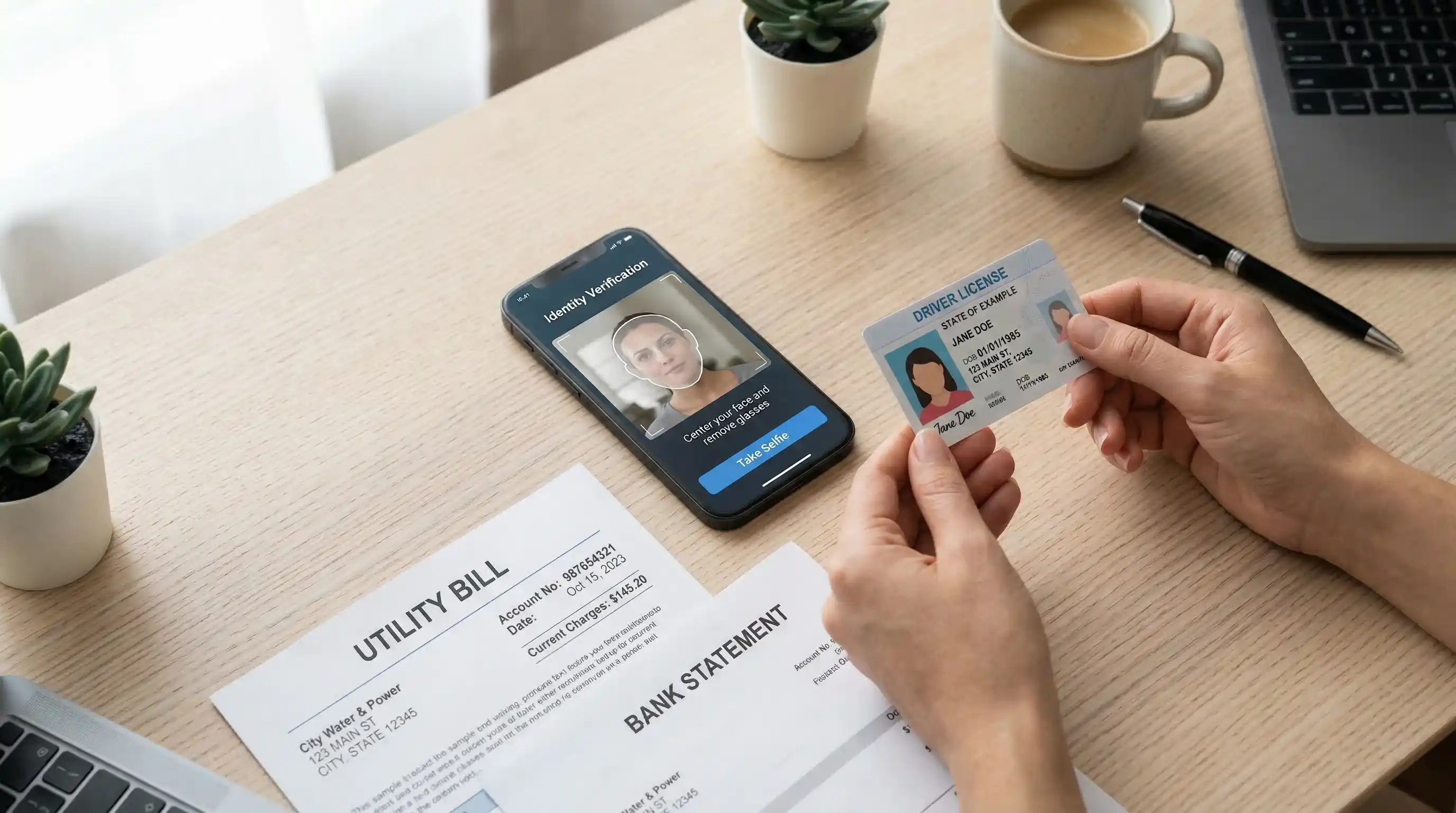
KYC verification stands between your Sweeps Coins balance and your bank account. Before any sweepstakes casino processes your first redemption, you’ll need to prove you are who you claim to be. This identity verification process—Know Your Customer, or KYC—frustrates some players who just want their money, but it exists for legitimate reasons that ultimately protect everyone involved.
Every reputable sweepstakes operator requires KYC before releasing prize payments. The requirements are standardized enough that once you’ve completed verification at one casino, you’ll know exactly what to expect at others. Getting ahead of this process—understanding what documents you need and how to submit them properly—eliminates the primary cause of redemption delays.
Players who treat KYC as an afterthought often encounter problems. Blurry photos, expired documents, mismatched names, and incomplete submissions create back-and-forth that extends what should be a 24-48 hour process into weeks of frustration. Those who prepare properly breeze through verification and enjoy smooth redemptions thereafter.
According to industry reporting, VGW—operator of Chumba Casino—remains the market leader despite its share dropping from over 90% in 2020 to roughly 50% now, per iGaming Business citing Eilers & Krejcik data. The company paid out $2.83 billion in player prizes during fiscal year 2023-24 according to SBC Americas reporting. That volume moves smoothly specifically because robust KYC procedures validate every recipient. The system works when you work with it.
Why KYC Exists at Sweepstakes Casinos
KYC requirements serve multiple purposes that benefit operators, regulators, and legitimate players alike.
Legal compliance drives the primary need. Anti-money laundering regulations require financial service providers—including entities that pay out prizes—to verify recipient identities. Sweepstakes casinos process prize payments functionally similar to other financial transactions, triggering these obligations. Operating without KYC would expose operators to severe legal consequences.
Fraud prevention protects the platform and its player base. Without identity verification, bad actors could create multiple accounts to abuse welcome bonuses, launder money through the platform, or steal funds from compromised accounts. KYC creates accountability that deters most fraudulent activity.
Age verification ensures compliance with sweepstakes rules requiring participants to be 18 or older (21 in some states). While registration asks for birthdate, KYC documents confirm that information against government-issued identification. This protects minors and shields operators from accusations of allowing underage participation.
Geographic confirmation matters because sweepstakes casinos can only operate in certain states. KYC documents verify that players actually reside in jurisdictions where the platform legally operates. With states like California and New York now banning sweepstakes casinos, this verification has become even more important for maintaining compliance.
Tax reporting obligations require accurate identity information. Prize payments above $600 trigger IRS reporting requirements. Operators need verified names, addresses, and Social Security Numbers to generate the 1099-MISC forms required by federal law. Incomplete KYC makes proper tax reporting impossible.
The bottom line: KYC isn’t bureaucratic harassment. It’s the infrastructure that allows sweepstakes casinos to operate legitimately, pay out billions in prizes, and maintain the legal standing that distinguishes them from illegal gambling operations.
Documents You Will Need
Most sweepstakes casinos require three categories of documentation. Having everything ready before you initiate verification streamlines the process considerably.
Government-issued photo ID serves as your primary identity document. Acceptable forms typically include a driver’s license, state ID card, or passport. The document must be current—expired IDs are universally rejected. Your photo must be clearly visible, as must all text including your name, date of birth, and expiration date.
Proof of address confirms your residence in a legally operating jurisdiction. Utility bills, bank statements, or official government correspondence work for most platforms. The document must be recent—usually within the last 90 days—and must clearly display your name and address matching what you provided during registration.
Social Security Number verification may be required for tax reporting purposes. Some casinos request the last four digits only; others need the full number for accounts expecting larger redemptions. A photo of your Social Security card or an official document displaying your SSN (such as a W-2) may be requested.
Secondary ID sometimes becomes necessary when primary documents raise questions. A second form of photo ID, additional proof of address, or supporting documentation may be requested if initial submissions don’t fully satisfy verification requirements.
Selfie verification has become increasingly common. Many platforms ask you to submit a photo of yourself holding your ID document, sometimes with a handwritten note including the date and casino name. This step confirms that you—not someone who stole your documents—are actually submitting the verification.
Account consistency matters throughout. The name on your verification documents must exactly match your account name. Nicknames, maiden names, or slight variations can trigger rejection. If you’ve legally changed your name since creating your account, you may need additional documentation such as a marriage certificate or court order.
The Verification Process Step by Step
While specific interfaces vary between casinos, the verification flow follows consistent patterns across platforms.
Initiation typically happens when you request your first redemption. Some casinos allow preemptive verification before you have redeemable balance; others only trigger the process once you’re actually trying to cash out. Proactive verification—completing KYC before you need it—prevents delays when you’re ready to redeem.
Document upload happens through a secure portal within your account settings. You’ll photograph or scan your documents and upload them directly. Mobile apps often allow camera capture directly into the submission form. Desktop users typically upload saved image files.
Image quality requirements exist because human reviewers or automated systems need to read your documents clearly. Photos should be well-lit, in focus, and show all four corners of each document. Avoid glare, shadows, and cropping that cuts off important information.
Initial review usually takes 24-48 hours for straightforward submissions. A compliance team member examines your documents, confirms they meet requirements, and either approves your verification or requests additional information. Volume fluctuations mean processing sometimes takes longer during promotional periods when many players are submitting redemptions.
Follow-up requests come if initial documents don’t fully satisfy requirements. You might need to resubmit with better image quality, provide additional proof, or clarify discrepancies. Respond promptly and thoroughly—incomplete responses extend the back-and-forth indefinitely.
Approval notification arrives once everything checks out. Your account status updates to “verified,” and future redemptions process without repeating the full KYC procedure. You’ve cleared the gate; the path to withdrawal is now open.
Common Issues and How to Resolve Them
Most KYC problems fall into predictable categories with straightforward solutions.
Blurry or low-quality images cause the majority of rejections. Your phone camera probably captures adequate quality if you hold it steady in good lighting. Take multiple shots and select the clearest one before uploading. If your camera struggles, try scanning documents with a flatbed scanner or using a document-scanning app that enhances image quality.
Expired documents require replacement before verification can proceed. If your driver’s license or passport has expired, you’ll need to renew it before completing KYC. Some platforms accept recently expired documents within a grace period, but don’t count on this—current documentation saves complications.
Name mismatches between your account and documents create immediate flags. If you registered with a nickname, middle name variation, or former name, contact support to update your account information before submitting verification. Provide supporting documentation (marriage certificate, court order) if your legal name differs from your original registration.
Address verification problems arise when your ID address doesn’t match your current residence. Recent movers commonly encounter this. Submit your ID along with a utility bill or bank statement showing your current address to demonstrate both your identity and present residence.
Technical upload failures sometimes prevent submission completion. Try a different browser, clear your cache, or use the mobile app if desktop uploads fail. Contact support with screenshots if problems persist—they can often provide alternative submission methods.
Multiple account suspicions can complicate verification if the platform believes you’ve created duplicate accounts. This violates terms of service at every sweepstakes casino. If you genuinely have only one account but face this accusation, you’ll need to work with support to demonstrate compliance.
Tips for Faster Approval
Strategic preparation cuts verification time dramatically compared to haphazard submissions.
Gather everything before starting. Have your ID, proof of address, Social Security card, and any other potentially required documents ready before you begin uploading. Submitting complete documentation in your first attempt eliminates back-and-forth delays.
Check expiration dates in advance. If your primary ID expires within the next few months, consider renewing preemptively. Future redemptions might require verification updates, and having current documents prevents complications.
Match everything to your account exactly. Before submitting, verify that your registered name, address, and other details match your documentation precisely. Update your account profile if necessary before initiating KYC.
Use good lighting and steady hands for photos. Natural daylight works better than artificial light for avoiding glare. Place documents on a contrasting surface (white paper on dark desk, for instance) and hold your camera parallel to the document face.
Submit during off-peak times when possible. Verification queues grow during evenings and weekends when more players are active. Submitting Monday through Thursday during business hours may yield faster review times simply due to lower volume.
Respond to follow-up requests immediately. If the verification team requests additional documentation, delays on your end become the bottleneck. Check your email (including spam folders) daily during the verification process and respond within hours, not days.
Keep copies of everything you submit. Screenshot your uploads or maintain copies of submitted documents. If questions arise later about what you provided, having records simplifies clarification.
Complete KYC Once, Redeem Freely
KYC verification feels burdensome exactly once—during your first redemption attempt. After that, your verified status enables smooth, fast withdrawals whenever you meet redemption thresholds. The upfront investment in proper documentation pays dividends across every future cash-out.
Treat verification as part of your platform onboarding rather than an obstacle to accessing your money. Complete it proactively when you’re not under pressure to get funds out. This calm approach leads to better document quality and faster approval than rushed submissions when you urgently need your redemption processed.
The sweepstakes casino industry’s legitimacy depends partly on these verification procedures. They distinguish regulated-style operations from fly-by-night schemes, protect players from identity theft and fraud, and maintain the compliance standing that allows platforms to operate legally. Participating constructively in KYC—providing accurate documentation promptly and completely—supports the ecosystem that makes SC redemption possible.
Your Sweeps Coins represent real value waiting to become real money. KYC is simply the final step connecting the two. Handle it properly once, and you’ll never think about it again.
Created by the "Free Sweeps Coins" editorial team.