
New York Sweepstakes Crackdown: S.5935A Law and SC Casino Status
 Available in US
New York took aggressive action against sweepstakes casinos in 2025, culminating in legislation that effectively banned the industry from one of its largest markets. Unlike California’s straightforward legislative prohibition, New York’s approach combined attorney general enforcement with new statutory authority, sending a clear message that the state considers sweepstakes casinos illegal gambling operations.
The crackdown hit operators hard. According to an Eilers & Krejcik study, the New York market represented approximately $762 million in annual sweepstakes sales in 2024. Losing access to nearly 20 million potential players in the state compounds the financial pressure from California’s simultaneous exit.
For New York residents who enjoyed sweepstakes casino play, the landscape has fundamentally changed. This guide explains the regulatory actions that led here, what the new law actually says, and where NY players stand in 2026.
New York Sweepstakes Crackdown — More on this topic at free sweeps coins.
Attorney General Enforcement Actions
New York Attorney General Letitia James initiated the crackdown by issuing cease-and-desist letters to 26 sweepstakes platforms operating in the state. The AG’s office argued that these platforms constituted illegal gambling under existing New York law, regardless of how they structured their promotional mechanics.
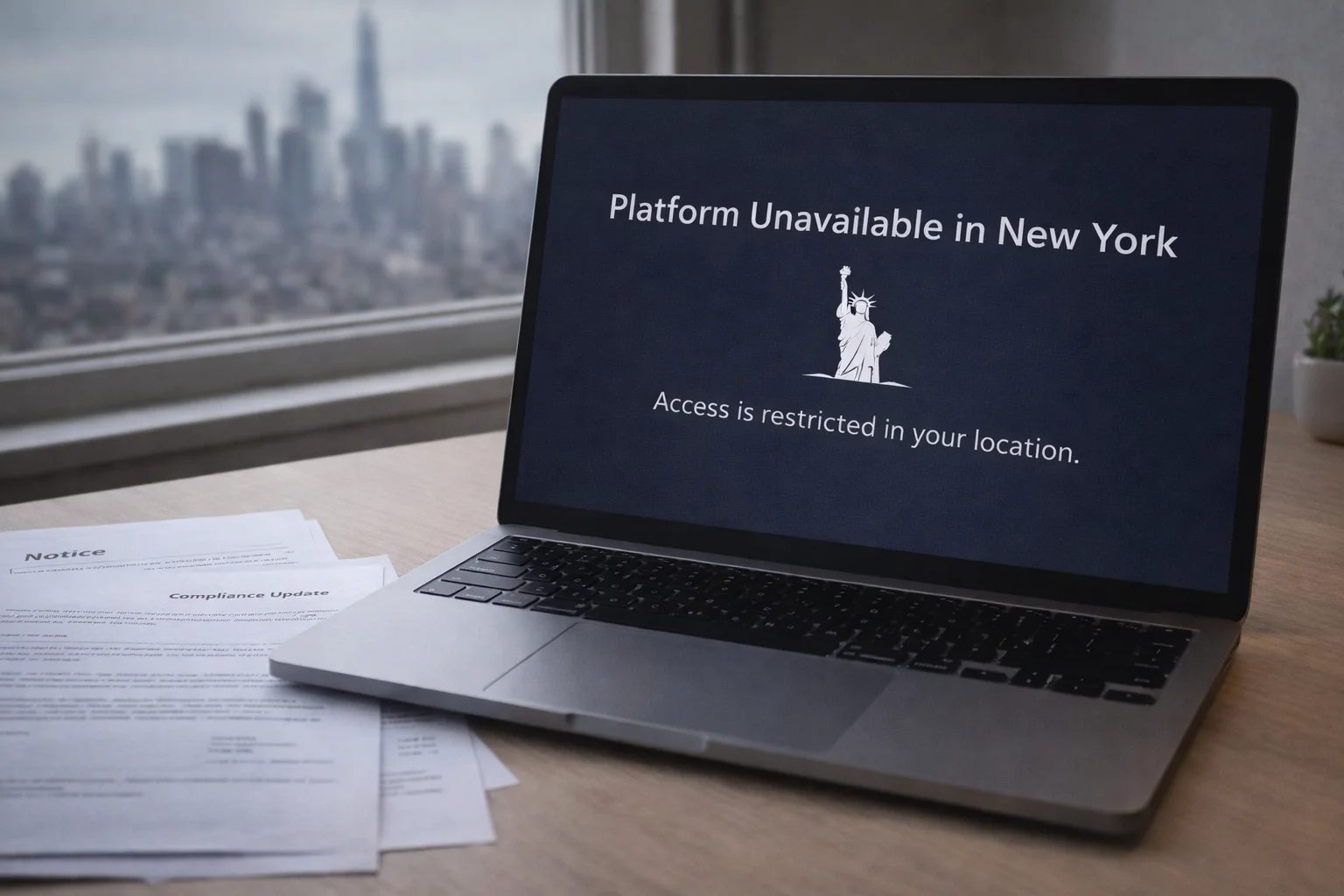
The cease-and-desist campaign put operators on notice that New York viewed sweepstakes casinos as unambiguously illegal. Platforms had to choose between fighting enforcement actions in court or exiting the market voluntarily. Most chose to exit, implementing geo-blocking for New York IP addresses rather than incur legal costs defending operations in a hostile jurisdiction.
Attorney General James characterized the operators as exploiting confusion between legal and illegal gambling. Her office’s position held that the promotional sweepstakes legal theory didn’t apply when the primary purpose of a platform was clearly gambling-style gaming with real-money prizes. The mechanics might technically satisfy sweepstakes law elements, but the overall operation still violated gambling prohibitions.
The AG’s actions preceded legislation, establishing through enforcement that New York considered these platforms illegal under current law. The subsequent legislation codified this interpretation and created explicit penalties, but operators were already leaving before the law passed.
S.5935A: The New Law
Governor Hochul signed Senate Bill S.5935A on December 8, 2025, creating explicit statutory authority against sweepstakes casinos. The law formalized what the Attorney General’s office had been arguing: that online sweepstakes platforms offering cash prizes through casino-style games constitute illegal gambling under New York law.
The legislation establishes civil penalties ranging from $10,000 to $100,000 for violations. These fines target operators, payment processors, and others who facilitate sweepstakes casino access for New York residents. The penalty structure provides significant deterrent force against companies considering whether to continue serving the market despite enforcement pressure.
Senator Joseph P. Addabbo Jr., chair of the Senate Racing, Gaming, and Wagering Committee, championed the bill. As he stated when it passed: “If a game on your phone or computer looks like a casino game, acts like a casino game, and pays out real money winnings like a casino game, then it is a casino gambling game, and is thus currently illegal and should not operate in New York without proper regulation, safeguards, and accountability.”
The law doesn’t criminalize individual players who accessed sweepstakes casinos before the ban. Like California, New York focused enforcement on operators and facilitators rather than consumers. However, the clear statutory language removes any ambiguity about whether these platforms can operate legally going forward.
Impact on NY Players and Industry
The $762 million New York market was substantial for sweepstakes operators. Combined with California’s exit, the two largest states by population are now off-limits, removing roughly a third of the potential US customer base. Operators who built business models around nationwide reach must now operate with significantly constrained geography.
Industry revenue projections have adjusted accordingly. Analysts expect 2026 net revenue around $3.6 billion, down from nearly $4 billion in 2025 and well below the $4.7 billion originally forecast before major state exits began. The growth trajectory that characterized the early 2020s has flattened as regulatory pressure intensifies.
For individual NY players, the practical impact is straightforward: sweepstakes casinos no longer serve the state. Accounts have been closed or restricted, pending withdrawals processed, and geo-blocking implemented. Players who maintained balances at the time of the crackdown generally had time to cash out before platforms cut access.
Some players reported frustration with the transition timing, particularly those who accumulated SC balances they hadn’t yet redeemed. Most operators provided reasonable notice periods and processed withdrawals normally. A few edge cases involved disputed balances or verification issues that became more complicated when the player could no longer access the platform normally.
Options for New York Players
New York actually offers legal alternatives that many other states lack. Mobile sports betting is legal and widely available through apps like FanDuel, DraftKings, BetMGM, and Caesars. While not the same as casino-style gaming, sports betting provides legal real-money wagering options for NY residents.
New York’s commercial casinos and tribal gaming properties offer in-person slot machines and table games. The state has multiple casino locations across different regions, providing options for players willing to travel for gaming entertainment. The in-person experience differs from online convenience, but the games themselves are similar.
Online casino gaming (iGaming) remains unavailable in New York, unlike neighboring New Jersey or Pennsylvania. Legislation to authorize iGaming has been proposed but hasn’t passed. If iGaming eventually becomes legal in New York, it would provide regulated online casino gaming to replace what sweepstakes platforms offered informally.
Social casino apps without real-money prizes continue operating normally. These platforms offer casino-style games for entertainment only, with no path to cash redemption. For players who enjoyed the gaming experience rather than prize potential, social casinos provide a legal option.
Attempting to access sweepstakes platforms through VPNs or other circumvention methods creates legal and practical risks. Beyond potential violation of state law, players using such methods face account closure and balance forfeiture if detected. Platforms have financial incentives to detect and block VPN usage from restricted states.
NY Sweepstakes Landscape Changed
New York’s combination of attorney general enforcement and explicit legislation closed the door on sweepstakes casinos more definitively than most state actions. The two-pronged approach sent unmistakable signals: the state considered these platforms illegal under existing law and created new statutory tools to ensure they stayed out.
See also Sweepstakes Casino Mobile Apps.
Senator Addabbo’s framing captured the legislative perspective: platforms that look like casinos and pay like casinos should be regulated like casinos or not operate at all. This logic resonates with regulators across multiple states, suggesting New York’s approach may serve as a model for future restrictions elsewhere.
For NY players, acceptance of the new reality makes the most practical sense. Legal alternatives exist for those seeking gambling entertainment, even if they don’t perfectly replicate the sweepstakes casino experience. The era of accessing Chumba, Stake.us, and similar platforms from New York has ended, and the political and legal forces that ended it show no signs of reversing.
Players who previously enjoyed sweepstakes gaming might watch for eventual iGaming legalization in New York. A regulated online casino market would provide legal access to similar games with consumer protections the unregulated sweepstakes space lacked. When that happens, it will come with taxation, licensing requirements, and responsible gaming frameworks, but also the legitimacy that sweepstakes platforms couldn’t achieve in the state’s regulatory environment.
Created by the "Free Sweeps Coins" editorial team.