
Mail-In Sweepstakes Bonuses: How AMOE Requests Work in 2026
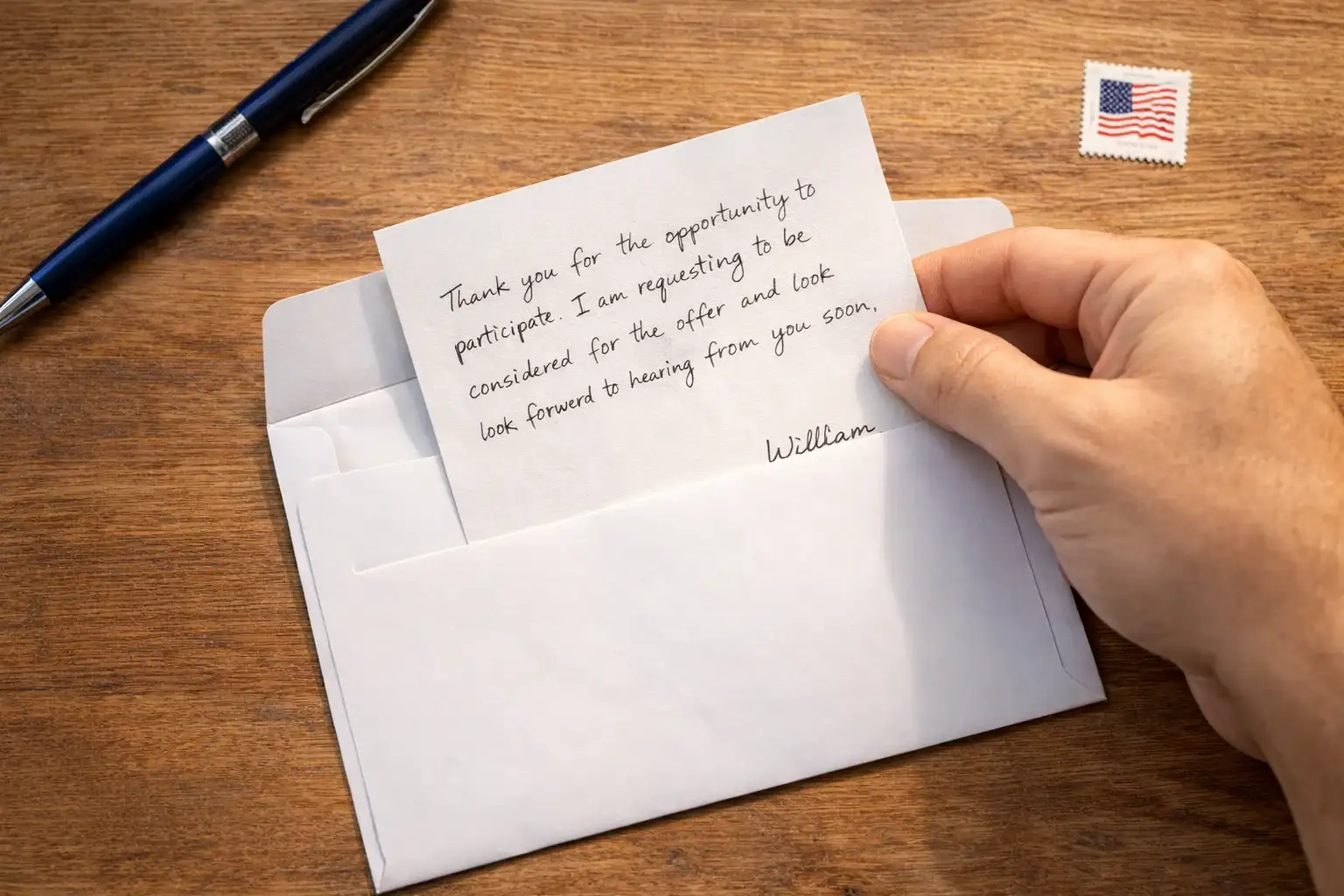
Mail-in bonuses offer a free Sweeps Coins method that most players overlook entirely. The Alternative Method of Entry, commonly abbreviated AMOE, exists because sweepstakes law requires operators to provide a way to participate without purchase. While daily logins and welcome bonuses get the attention, mail-in requests deliver SC directly to your account through nothing more than an envelope, a stamp, and a few minutes of your time.
The concept sounds almost anachronistic in 2026. Mailing a physical letter to receive digital currency feels like a remnant from another era. But sweepstakes casinos aren’t typical digital businesses—they operate under promotional sweepstakes frameworks that mandate no-purchase entry routes. As industry veteran Justin Koch has noted, “As the industry grows, it’s vital that sweepstakes casinos prioritize transparency and responsible gaming.” Mail-in entries represent that transparency in action, ensuring access remains open regardless of whether players buy Gold Coins.
This guide explains how AMOE requests work at major US sweepstakes platforms, what to include in your envelope, where to send it, and how long processing typically takes. The method won’t replace daily bonuses as your primary SC source, but it adds another free entry point for players who want to maximize their earning potential.
What AMOE Actually Means
AMOE stands for Alternative Method of Entry, a legal requirement for legitimate sweepstakes. Under US promotional sweepstakes law, any contest offering prizes must provide a way to enter without payment. Without this provision, a sweepstakes becomes an illegal lottery—combining prize, chance, and consideration (payment) in a way that triggers gambling regulations. The no-purchase entry option removes the consideration element, keeping the entire model legal.
For sweepstakes casinos, this typically means mailing a handwritten request to receive free SC. The requirement isn’t optional window dressing. It’s the structural feature that separates legal sweepstakes operations from gambling operations that would need state-by-state licensing. Sweepstakes platforms remain available in thirty-five or more states while traditional online gambling operates legally in only seven, according to KPMG’s 2025 gaming industry primer. The AMOE mechanism enables that broader access.
Each casino specifies exact requirements in its terms and conditions. Some accept one request per day; others allow weekly or monthly submissions with different SC amounts per request. The terms change periodically, so checking current rules before sending matters. Most operators post AMOE instructions in their legal documents or help center sections, though finding them sometimes requires deliberate searching rather than casual browsing.
The practical effect for players: a consistent way to accumulate SC beyond daily logins, welcome bonuses, and social media giveaways. It requires more effort than clicking a button but costs only postage. For players in states where some platforms have withdrawn due to regulatory pressure, mail-in options may not apply, but for those in available states, AMOE requests remain a valid free SC source.
Current Mail-In Addresses by Casino
Chumba Casino, operated by VGW, maintains one of the most established mail-in programs. The process requires a handwritten request on a plain piece of paper, including your name, email address registered with your Chumba account, and a statement requesting free Sweeps Coins. The envelope goes to VGW’s designated address, which the company lists in its official sweepstakes rules. Since VGW paid out $2.83 billion in sweepstakes prizes during fiscal year 2023-2024 according to their financial reports, the company processes substantial mail-in volume as part of its regular operations.
LuckyLand Slots, also operated by VGW, uses the same parent company address but requires you to specify which platform you’re requesting coins for. The two brands share infrastructure but maintain separate account systems, so including the correct platform name in your request prevents processing delays or misrouted credits.
Stake.us accepts mail-in requests at its designated corporate address, with slightly different formatting requirements. The platform specifies what information to include and how many requests you can send per time period. As sweepstakes market competition has intensified—with VGW’s market share declining from over ninety percent in 2020 to approximately fifty percent today according to Eilers & Krejcik Gaming research—Stake.us has emerged as a major alternative, and its mail-in program serves the same legal function while reaching a different player demographic.
McLuck, Pulsz, and WOW Vegas each operate their own AMOE programs with varying addresses and request limits. The common thread across all platforms: handwritten requests to specified addresses, proper identification of your account, and adherence to stated frequency limits. Photocopied or printed requests typically get rejected, as do requests exceeding the allowed submission rate.
Before sending anything, verify current addresses directly through each platform’s official terms and conditions or help center. Companies occasionally change processing locations, and outdated address information results in undelivered requests. A few minutes of verification prevents wasted postage and waiting time.
Preparing Your Mail-In Request
A successful mail-in request requires attention to specific details that vary by operator. Start with a standard piece of paper—lined notebook paper or plain white printer paper both work. Most platforms explicitly prohibit postcards, which lack the enclosure required by their processing systems. A standard number ten business envelope provides adequate size for a single-sheet request.
Write your request by hand. This requirement filters out mass-produced entries and confirms human submission. Include your full legal name as registered on your casino account, the email address linked to that account, and a clear statement requesting free Sweeps Coins. Some platforms specify exact wording; others accept any reasonable phrasing that conveys the request. Adding your username provides extra verification if your account email changed after registration.
The envelope itself needs proper postage for standard first-class mail. A single stamp covers most requests, though adding an extra stamp as insurance against postal rate increases costs little. Address the envelope exactly as specified in the platform’s terms—abbreviations or formatting variations can cause processing issues. Return address labeling isn’t always required but helps postal services route undeliverable mail back to you rather than discarding it.
Send one request per envelope unless the platform explicitly allows bundled requests. Stuffing multiple requests into a single envelope typically violates terms and results in none being processed. The same logic applies to frequency limits: if a platform allows one request per week, sending daily requests won’t multiply your SC—it will likely flag your account for review and delay all pending credits.
Keep copies of your requests, including dates sent. If credits don’t appear within stated processing windows, having documentation helps customer support trace what happened. A simple photo of each request before sealing the envelope provides adequate records without requiring elaborate tracking systems.
Processing Times and Expected SC
Processing timelines range from one to four weeks depending on the operator and current mail volume. Chumba and LuckyLand typically process requests within seven to fourteen business days after receipt, though holiday periods and promotional events can extend this window. The SC appears in your account balance without notification—you need to check manually or notice the balance change during normal play.
SC amounts per request vary by platform and occasionally by time period. Standard AMOE credits range from 2 SC to 10 SC per approved request, though promotional periods sometimes offer enhanced amounts. The value per request might seem modest compared to welcome bonuses that deliver fifty or more SC at once, but the renewable nature of mail-in requests means consistent submitters accumulate meaningful totals over time.
Monthly accumulation potential depends on allowed request frequency. A platform permitting daily requests at 5 SC each could theoretically deliver 150 SC monthly—though postage costs of fifteen to twenty dollars for thirty stamps reduce the net value. Weekly limits make more practical sense for most players, balancing effort and postage against SC received. At one request per week yielding 5 SC, monthly totals reach 20 SC for roughly two dollars in stamps.
Some players batch-prepare requests during a single session, pre-addressing and stuffing envelopes for the week or month. This approach concentrates the manual effort into one block rather than requiring daily attention. The envelopes can be mailed together or spaced out depending on platform rules about receipt timing versus postmark dates.
Rejected requests typically result from incomplete information, illegible handwriting, or frequency violations. Most platforms don’t notify you of rejections—the credits simply never appear. If expected SC doesn’t arrive within stated processing windows plus a few extra days, contacting customer support with your submission records helps determine whether the request was rejected or lost in processing.
Your Backup SC Method
Mail-in AMOE requests occupy a specific niche in free SC strategy. They require more effort than clicking daily bonus buttons and deliver smaller instant payouts than welcome bonuses. What they offer instead is consistency: a renewable SC source that remains available as long as you maintain the habit and follow platform rules correctly.
For players who already maximize daily logins and social media giveaways, mail-in requests represent the next layer of optimization. The effort-to-reward ratio makes sense primarily for those who treat SC accumulation as a deliberate project rather than casual entertainment. A few minutes of preparation per week, a dollar or two in postage, and patience during processing windows translate into additional free SC that supplements other methods.
The legal foundation that makes AMOE necessary also makes it reliable. Sweepstakes operators can adjust welcome bonus sizes, modify daily reward structures, or limit promotional codes, but they cannot eliminate the no-purchase entry option without fundamentally changing their legal standing. That structural permanence gives mail-in requests a stability that other bonus types lack, making them worth understanding even if you never send a single envelope.
Created by the "Free Sweeps Coins" editorial team.