
How to Redeem Sweeps Coins for Cash: Complete Withdrawal Guide
 Available in US
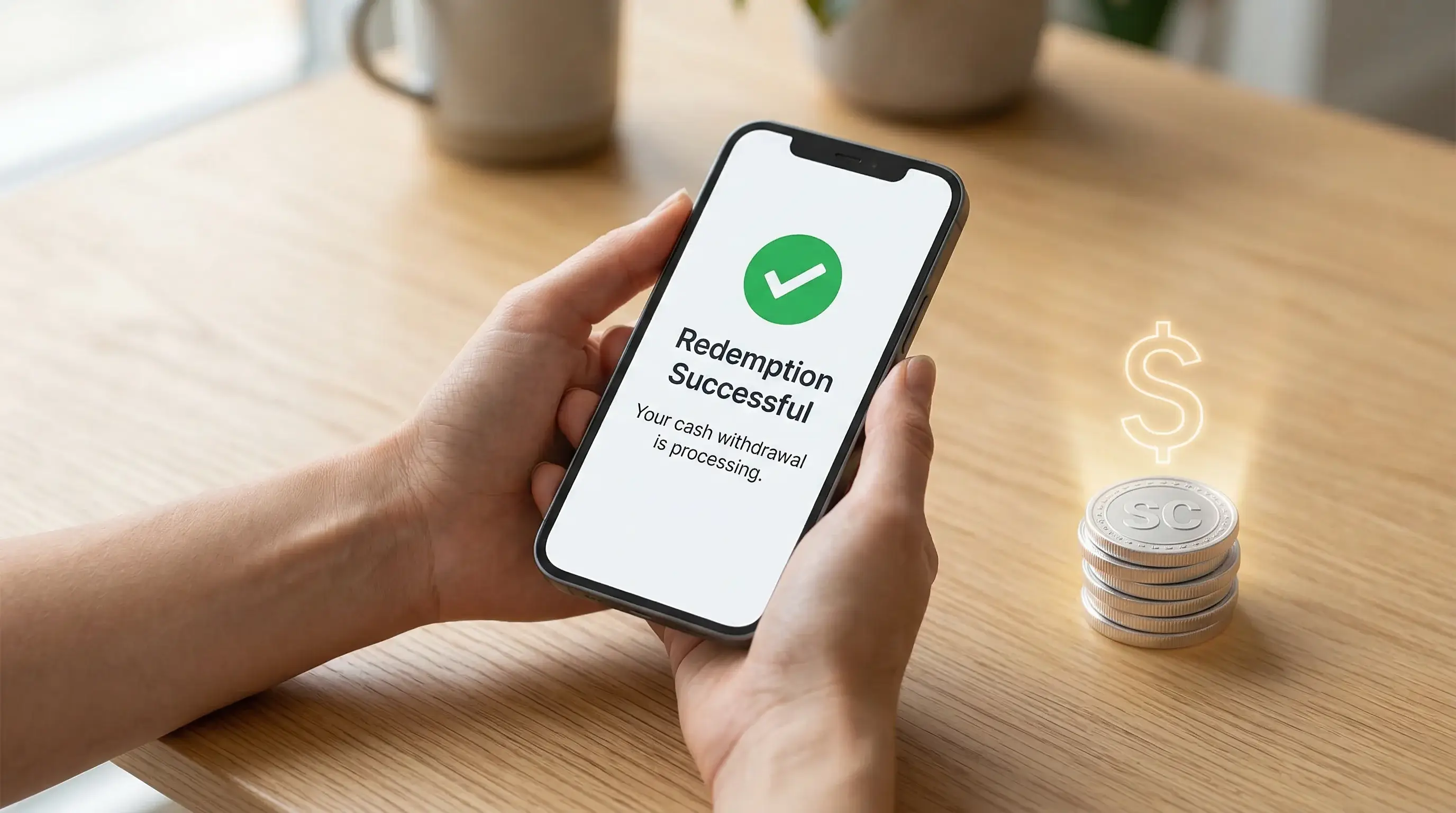
Learning how to redeem Sweeps Coins for cash transforms sweepstakes casino play from entertainment into a genuine prize opportunity. Unlike Gold Coins that exist purely for gameplay, Sweeps Coins carry real value—but accessing that value requires understanding the redemption process, meeting eligibility requirements, and navigating verification procedures that protect both operators and players.
The conversion rate is straightforward: 1 Sweeps Coin equals $1 USD in prize value. Accumulate 100 SC, and you’ve earned $100 in potential prizes. But potential isn’t actual until you successfully complete a redemption. Several conditions must be satisfied before any platform will process a withdrawal request, and the timeline from request to receipt varies based on verification status, payout method, and platform procedures.
This guide covers every aspect of the redemption process. From the playthrough requirements that determine when your SC becomes eligible, through the KYC verification that confirms your identity, to the payout methods that deliver prizes to your account—each step is explained with practical guidance for avoiding common problems. The information applies broadly across major platforms, though specific thresholds and timelines vary by operator.
The stakes are real. According to KPMG’s industry analysis, sweepstakes casino gross revenue exceeded $10.6 billion in 2024, with significant portions returning to players as redeemed prizes. Understanding the redemption process ensures you can access your share of those prize distributions.
Whether you’re preparing for your first redemption or troubleshooting a delayed payout, this information helps you understand what operators require and what you should expect at each stage of the process.
How to Redeem Sweeps Coins for Cash — More on this topic at free sweeps coins.
- Eligibility Requirements for SC Redemption
- Playthrough Requirements Explained
- Minimum Redemption Thresholds by Platform
- KYC Verification: What You Need and Why
- Payout Methods Detailed
- Processing Timeline: From Request to Receipt
- Troubleshooting Redemption Issues
- Tax Considerations for SC Prizes
- Turning Sweeps Coins into Real Cash
Eligibility Requirements for SC Redemption
Before any redemption request can process, players must meet several eligibility requirements. These conditions exist both to protect operators from abuse and to comply with legal requirements governing prize distributions.
Age verification comes first. All sweepstakes casinos require players to be at least 18 years old, and some set the threshold at 21 depending on state requirements. Your registered birthdate must indicate legal age, and KYC documentation will confirm this information during verification.
Residency in an eligible state is mandatory. Platforms geo-block registration from prohibited states, but players who move or travel to banned jurisdictions after registration may find their redemption eligibility suspended. Your account address must show a state where the platform operates legally, and some platforms require proof of residency matching that address.
Account verification must be complete. This includes confirming your email address, linking a valid phone number, and eventually completing full KYC documentation. Unverified accounts can play and accumulate SC but cannot redeem until verification finishes.
Your account must be in good standing without outstanding terms violations. Players flagged for bonus abuse, multiple account creation, fraud attempts, or other prohibited activities will find redemption requests denied. Platform terms of service specify prohibited behaviors that can result in account restrictions or forfeiture of SC balances.
Finally, your Sweeps Coins must have met playthrough requirements and reached the minimum redemption threshold. These conditions are detailed in the following sections, but both must be satisfied before the redemption option even appears in your account interface.
Playthrough Requirements Explained
Playthrough requirements determine when accumulated Sweeps Coins become eligible for redemption. Nearly all sweepstakes casinos impose a 1x playthrough rule, meaning you must wager your SC at least once before cashing out. This requirement prevents immediate withdrawal of promotional bonuses without any gameplay.
The 1x standard is remarkably player-friendly compared to traditional online casino wagering requirements. Licensed gambling sites typically require 20x to 40x playthrough before bonus withdrawals—meaning $100 in bonus must generate $2,000 to $4,000 in wagers before becoming redeemable. Sweepstakes casinos asking only 1x means $100 in SC requires just $100 in wagers.
Understanding what “wagering” means in this context matters. Every spin, hand, or bet counts toward your playthrough total at full value. A $1 SC bet on slots adds $1 to your wagered total regardless of whether you win or lose. Game type doesn’t typically affect playthrough contribution rates at sweepstakes casinos—unlike licensed sites where table games might contribute only 10% to requirements.
Your account interface typically displays both total SC balance and redeemable SC balance. The difference represents SC that hasn’t yet met playthrough requirements. New welcome bonus SC, daily login SC, or promotional SC all start as non-redeemable and convert to redeemable status as you play.
Some platforms apply playthrough requirements per acquisition source rather than globally. SC received from daily login might meet playthrough independently from SC received through mail-in requests. Understanding your platform’s specific tracking helps you monitor redemption eligibility accurately.
Gameplay that results in losses still counts toward playthrough. If you receive 50 SC as a bonus, wager all 50 SC and lose, the playthrough requirement is satisfied—you simply have nothing left to redeem. This mechanic means playthrough completion and redemption eligibility don’t guarantee you’ll have SC remaining to withdraw.
Minimum Redemption Thresholds by Platform
Each platform sets minimum SC amounts required for redemption requests. These thresholds exist to make processing economically viable—handling many small transactions would strain payment systems and increase operational costs. Understanding your platform’s threshold helps you plan accumulation and redemption timing.
Chumba Casino requires minimum 100 SC for redemption. This threshold means new players relying solely on free daily SC need significant time to accumulate redemption eligibility. At typical daily login rates of 0.3 to 1 SC, reaching 100 SC through free methods alone could take several months.
Stake.us sets a lower 50 SC minimum for most payout methods, making first redemptions more accessible. Combined with their daily rakeback system, players can reach redemption eligibility faster than at higher-threshold platforms.
McLuck, High 5 Casino, and most mid-market platforms use 50 SC minimums. This industry-standard threshold balances accessibility against processing efficiency. Some platforms offer reduced minimums for cryptocurrency withdrawals or increased minimums for traditional banking.
Maximum redemption limits also exist at some platforms. Daily or weekly caps prevent exceptionally large single withdrawals, spreading prize distribution over time. High-value redemptions may trigger additional verification requirements regardless of whether they exceed stated maximums.
Platform terms occasionally change thresholds, so verify current requirements before planning redemption timing. Promotional periods sometimes temporarily reduce minimums, creating opportunities for players close to standard thresholds.
KYC Verification: What You Need and Why
Know Your Customer (KYC) verification is mandatory before any prize redemption. This process confirms your identity, prevents fraud, and ensures sweepstakes prizes reach legitimate winners. While KYC creates friction, it’s non-negotiable—no platform will process redemptions without completed verification.
Required documentation typically includes a government-issued photo ID such as a driver’s license, state ID, or passport. The document must be current (not expired), clearly legible, and match the name on your account. Some platforms accept photos of physical documents while others require uploaded scans.
Proof of address confirms your residency in an eligible state. Utility bills, bank statements, or official correspondence dated within the past 90 days typically satisfy this requirement. The address on these documents must match your account registration.
Additional verification may be required depending on redemption amounts or platform risk assessment. Selfie verification—a photo of you holding your ID—adds an extra identity confirmation layer. Some platforms request proof of payment method ownership, particularly for high-value redemptions.
Verification timeline varies from same-day approval to 72+ hours depending on document quality, platform processing volume, and whether manual review becomes necessary. Submitting clear, complete documentation speeds approval. Blurry images, expired documents, or mismatched information triggers delays and requests for resubmission.
Complete KYC verification before accumulating large SC balances. Waiting until you’re ready to redeem creates frustration when verification delays hold up your prizes. Proactive verification means smoother redemption when you eventually request payouts.
Failed verification usually results from document issues rather than account problems. If verification is denied, platforms typically specify what’s wrong—unclear image, expired document, name mismatch—allowing you to submit corrected documentation. Persistent failures may require customer support intervention.
Payout Methods Detailed
Sweepstakes casinos offer several prize redemption methods, each with different processing speeds, availability, and potential fees. Choosing the right method depends on your priorities—speed, convenience, or avoiding third-party fees.
ACH Bank Transfer
Direct bank transfer via ACH (Automated Clearing House) represents the most common redemption method. Funds transfer directly to your checking account without intermediary services, avoiding fees that might apply to alternative methods.
Setup requires providing your bank account and routing numbers. This information links your sweepstakes account to your bank for direct deposits. Some platforms verify the connection through micro-deposits—small test transfers you confirm to prove account ownership.
Processing time typically runs 3-5 business days after redemption approval. The multi-day timeline reflects ACH network processing rather than platform delays. Weekends and holidays don’t count toward processing days, so redemptions requested on Thursday might not arrive until the following week.
ACH transfers carry no fees from most sweepstakes platforms, though your bank might apply incoming deposit fees depending on your account type. The combination of zero platform fees and direct deposit makes ACH the preferred method for most players despite slower processing.
Reliability is high once your bank account is successfully linked. Failed ACH transfers usually result from incorrect account information rather than platform issues. Verify your routing and account numbers carefully during setup to avoid rejection and reprocessing delays.
PayPal
PayPal availability varies by platform—some support it fully, others offer it for specific transactions, and some don’t offer it at all. Where available, PayPal provides faster processing than ACH while maintaining broad accessibility.
Connecting your PayPal account typically requires email verification to confirm you control the associated PayPal account. Some platforms require the PayPal email to match your sweepstakes account email, adding a consistency requirement.
Processing time is usually faster than ACH, often completing within 24-48 hours after approval. Once funds reach your PayPal balance, you can transfer them to your linked bank account (adding another 1-3 days) or use the balance directly for purchases or transfers.
PayPal may apply fees depending on your account type and transaction specifics. Sweepstakes platforms typically don’t charge for PayPal redemptions, but PayPal’s own fee structure applies once funds arrive. Review PayPal’s current terms for your account to understand potential costs.
Cryptocurrency
Cryptocurrency redemption offers the fastest processing available—often same-day, sometimes within hours. Platforms supporting crypto typically accept Bitcoin (BTC) and Ethereum (ETH), with some adding additional tokens.
Setup requires providing your wallet address for the relevant cryptocurrency. This address must be accurate since crypto transactions are irreversible. Sending funds to an incorrect or incompatible address results in permanent loss.
Processing speed represents crypto’s primary advantage. Once approved, blockchain transactions typically confirm within minutes to hours depending on network congestion. No banking intermediaries means no multi-day waiting periods. According to player reports, Stake.us crypto withdrawals often complete within six hours of approval.
Crypto requires comfort with digital wallets, blockchain technology, and potentially volatile exchange rates. The USD value of your redemption converts to cryptocurrency at processing time—meaning your received crypto may be worth more or less in dollars by the time you spend or exchange it.
For players already using cryptocurrency, these redemptions offer unmatched speed. For players unfamiliar with crypto, the learning curve and volatility risk make traditional banking methods more appropriate despite slower processing.
Processing Timeline: From Request to Receipt
Understanding the complete redemption timeline helps set realistic expectations and identify when delays indicate actual problems versus normal processing time.
Step one is submission. You request a redemption through your account interface, specifying the amount and payout method. This step completes instantly if you meet all eligibility requirements. If requirements aren’t met—insufficient redeemable SC, incomplete KYC, account restrictions—the system prevents submission and indicates what’s missing.
Step two is platform review. Operators review redemption requests before approval, checking for fraud indicators, terms compliance, and verification completeness. This review takes anywhere from instant approval to 24-48 hours depending on platform procedures, request amount, and whether your account has been flagged for manual review.
Step three is payment processing. After approval, the platform initiates payment through your selected method. This is when method-specific timelines apply—same-day for crypto, 1-2 days for PayPal, 3-5 business days for ACH. The clock starts at approval, not request submission.
Step four is receipt and confirmation. Funds arrive in your external account, and the redemption shows as completed in your platform transaction history. Some platforms send email confirmation; others update only the interface.
The demonstrated scale of successful redemptions should provide confidence in the process. According to VGW financial reporting, that company alone paid out $2.83 billion in sweepstakes prizes during fiscal year 2023-24. This volume demonstrates that redemptions regularly process successfully across the industry.
Total timeline from request to receipt typically ranges from same-day (crypto at fast-processing platforms) to 7-10 business days (ACH at platforms with slower review). First-time redemptions often take longer due to additional verification scrutiny that isn’t required for subsequent withdrawals.
Troubleshooting Redemption Issues
Redemption problems frustrate players, but most issues have identifiable causes and solutions. Understanding common problems helps resolve them efficiently.
Redemption request rejected typically means eligibility requirements aren’t met. Check that playthrough is complete (redeemable SC matches total SC), KYC is verified, your account is in good standing, and you’re requesting at least the minimum amount. The rejection message usually indicates the specific problem.
Pending status extended beyond expected timeline warrants investigation. Contact customer support with your request details and ask for status clarification. Legitimate delays include high request volume, holiday processing backlogs, and additional verification requirements. Ongoing vague responses without resolution suggests more serious issues.
KYC rejected requires identifying the specific document problem. Request clarification from support if the rejection reason isn’t clear. Resubmit with better-quality images, current documents, or corrected information as indicated. Multiple rejections without clear guidance may require escalation.
Funds not received after confirmed completion means checking your receiving account. Verify the bank account or wallet address is correct. Check with your bank whether incoming deposits are being held. For ACH, confirm processing business days have actually elapsed (weekends don’t count).
Account restricted or suspended during redemption process indicates the platform detected concerning activity. This could be legitimate fraud prevention or error. Contact support immediately to understand the restriction reason. Provide requested information promptly. If you’ve genuinely violated terms, recovery may not be possible.
Document all communications with customer support. Note dates, representative names if provided, and specific promises or timelines given. This documentation helps if escalation becomes necessary or if patterns of non-responsive support emerge.
Tax Considerations for SC Prizes
Sweepstakes prizes are taxable income under US federal law. The IRS treats sweepstakes winnings as “other income” subject to standard income tax rates. Understanding tax obligations prevents unpleasant surprises during tax season.
The $600 reporting threshold triggers formal documentation. Platforms must issue 1099-MISC forms to players who redeem $600 or more in prizes during a calendar year. This form reports your winnings to both you and the IRS, creating an official record that requires corresponding reporting on your tax return.
Amounts below $600 remain taxable even without 1099-MISC issuance. The reporting threshold affects paperwork requirements, not tax liability. Technically, all sweepstakes prizes should be reported as income regardless of amount. Many small winners don’t report modest prizes, but this represents non-compliance rather than legal exemption.
State income taxes may apply depending on your state’s tax structure. Some states have no income tax; others tax gambling and prize winnings at standard or special rates. Your state’s tax authority provides guidance on sweepstakes prize treatment.
Consider setting aside a portion of large redemptions for tax liability. Prize money received is gross income—you’ll owe taxes on it later. Players who spend entire prizes without reserving tax funds face payment difficulties when tax bills arrive.
Gambling losses cannot offset sweepstakes prizes for tax purposes. The IRS treats sweepstakes differently from gambling, meaning the loss deduction rules that apply to casino gambling don’t apply to sweepstakes winnings. Consult a tax professional for guidance specific to your situation.
Turning Sweeps Coins into Real Cash
The redemption process transforms virtual currency into genuine prizes, but success requires understanding each step along the way. Playthrough requirements, verification procedures, and processing timelines all stand between accumulated SC and money in your account. Yet millions of successful redemptions demonstrate the system works for players who follow proper procedures.
See also Maximize Free Sweeps Coins.
Prepare proactively by completing KYC verification early, understanding your platform’s minimum thresholds, and selecting appropriate payout methods before you’re ready to redeem. Waiting until redemption time to handle these preliminaries creates delays and frustration that simple advance planning would avoid.
Choose payout methods based on your priorities. Cryptocurrency offers speed at the cost of volatility and technical complexity. ACH provides reliability without fees but requires patience. PayPal balances speed and accessibility where available. No single method suits everyone—evaluate based on your specific circumstances and comfort level.
Monitor your redeemable SC balance separately from total SC. The interface distinction matters—only redeemable SC can be withdrawn. Complete playthrough requirements through normal gameplay rather than rushing to reach thresholds through maximum-bet strategies that might deplete your balance before reaching redemption eligibility.
Justin Koch, a sweepstakes industry veteran at SweepsCasinos.US, has emphasized the importance of player-friendly practices in comments reported by World Casino Directory: “As the industry grows, it’s vital that sweepstakes casinos prioritize transparency and responsible gaming. These platforms have the potential to offer a safe and enjoyable experience, but that hinges on their commitment to ethical practices and clear communication with players.” This perspective applies directly to redemption processes—transparent requirements and reliable processing build player confidence.
Document issues and maintain records of customer support interactions. Most redemptions process smoothly, but preparation for problems ensures you can resolve them if they arise. The billions in prizes that operators have successfully paid demonstrate that the system works—understanding how it works helps you navigate it successfully.
Created by the "Free Sweeps Coins" editorial team.